
N-Acetyl Epithalon
$150.00
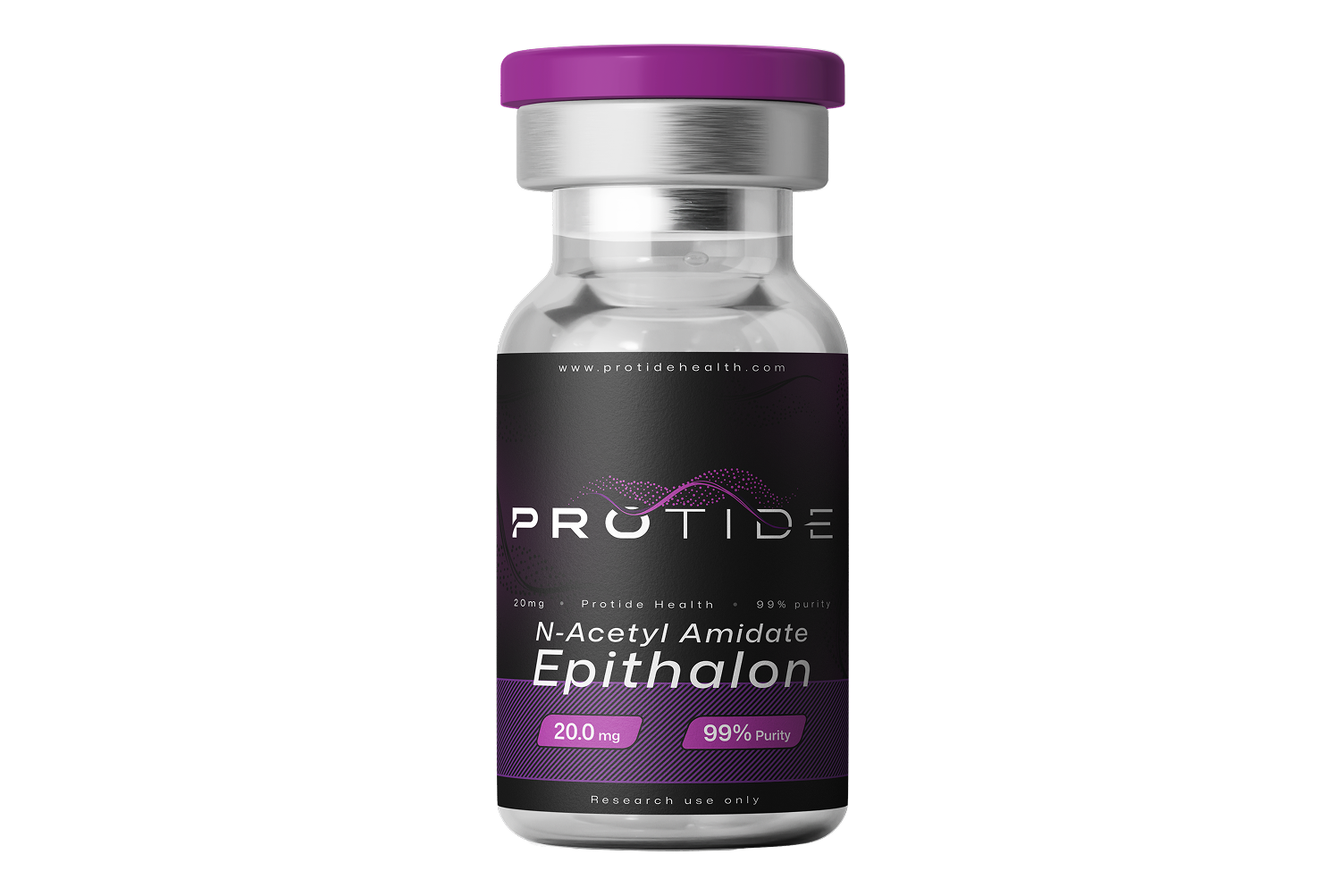
N-Acetyl Epithalon 20mg product shot featuring a professionally labeled Protide Health 3mL research vial containing white to off-white lyophilized Ac-AEDG powder, with the 20mg strength and N-Acetyl Epithalon identity clearly displayed against a clean laboratory-style background with research-use-only labeling.


N-Acetyl Epithalon 20mg – Protide Health USA
N-Acetyl Epithalon Overview & Technical Specifications
N-Acetyl Epithalon, also cataloged as N-Acetyl Epitalon, is a synthetic tetrapeptide derived from the parent AEDG sequence:
Ala-Glu-Asp-Gly
The acetylated form is represented as:
Ac-Ala-Glu-Asp-Gly-OH
or:
Ac-AEDG
N-terminal acetylation converts the free N-terminal amino group of parent Epithalon into an acetylated amide. This produces a chemically distinct molecular entity rather than merely another spelling of conventional Epithalon.
Verified chemical data for the acetylated compound include:
- PubChem CID: 171390141
- Molecular Formula: C16H24N4O10
- Molecular Weight: 432.38 g/mol
- IUPAC Condensed Sequence: Ac-Ala-Glu-Asp-Gly-OH
Protide Health supplies N-Acetyl Epithalon as 20mg of 99% purity lyophilized material for controlled biochemical, molecular, analytical, peptide-comparison, and qualified preclinical research.
Technical Specifications
- Product Name: N-Acetyl Epithalon
- Alternative Name: N-Acetyl Epitalon
- Quantity: 20mg
- Form: Lyophilized powder
- Vial Size: 3mL
- Purity: 99%
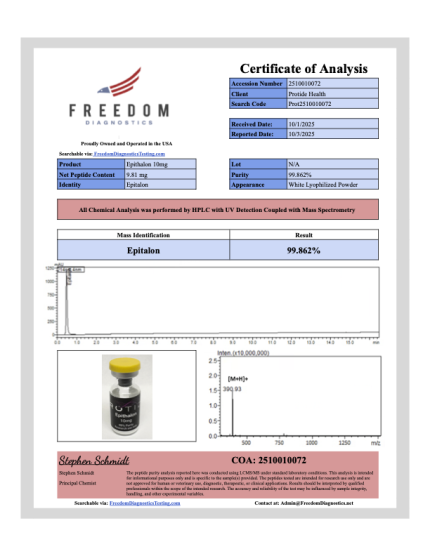
- Testing: HPLC-MS verified; third-party tested
- Peptide Length: 4 amino acids
- Sequence: Ac-Ala-Glu-Asp-Gly-OH
- Abbreviated Sequence: Ac-AEDG
- PubChem CID: 171390141
- Molecular Formula: C16H24N4O10
- Molecular Weight: 432.38 g/mol
- Appearance: White to off-white lyophilized powder
- Storage: Store sealed at ≤6°C and protected from heat, light, and moisture
- Research Use: Biochemical, molecular, structural, analytical, and qualified preclinical research only
N-Acetyl Epithalon Structure & Research Context
The defining feature of N-Acetyl Epithalon is the addition of an acetyl group to the N-terminus of the parent AEDG tetrapeptide.
Parent Epithalon has the sequence:
H-Ala-Glu-Asp-Gly-OH
N-Acetyl Epithalon has the sequence:
Ac-Ala-Glu-Asp-Gly-OH
This terminal modification changes the molecule’s elemental composition and molecular mass.
Parent Epithalon is cataloged with molecular formula C14H22N4O9 and molecular weight approximately 390.35 g/mol, whereas the N-acetylated analogue is C16H24N4O10 with molecular weight 432.38 g/mol.
Researchers should therefore treat the two forms as related but chemically distinct experimental materials.
N-Terminal Acetylation Research
N-terminal acetylation is a common structural modification in peptide chemistry.
Depending on the specific sequence and experimental system, acetylation may influence properties such as:
- Terminal charge
- Peptide conformation
- Proteolytic susceptibility
- Molecular recognition
- Protein binding
- Chemical stability
These possibilities provide a rationale for comparative research between N-Acetyl Epithalon and unmodified AEDG.
However, the effects of acetylation must be measured directly for this specific peptide rather than assumed from other acetylated molecules.
Parent Epithalon Research
Most published literature relevant to AEDG concerns unmodified Epithalon, not N-Acetyl Epithalon.
Researchers can review broader Epithalon and AEDG research indexed by PubMed for studies involving the parent tetrapeptide.
Published investigations of AEDG have examined experimental systems involving:
- Telomerase activity
- Telomere biology
- Gene expression
- Chromatin organization
- Histone interactions
- Neurogenic differentiation
- Pineal peptide biology
- Cellular oxidative-stress models
These studies help establish the research history of the parent sequence but should not be presented as direct evidence for the acetylated analogue.
Gene-Expression & Epigenetic Research on Parent AEDG
One published study evaluated AEDG in human gingival mesenchymal stem cells and reported changes in expression and synthesis of neurogenic differentiation markers including Nestin, GAP43, β-tubulin III, and Doublecortin.
Molecular modeling in the same work explored potential interactions between AEDG and histone H1 subtypes.
This work provides mechanistic research context for the parent sequence while leaving open the question of whether N-Acetyl Epithalon behaves similarly.
The N-terminal acetyl group changes the molecule and may affect molecular interactions, so direct equivalence should not be assumed.
Telomerase & Telomere Research on Parent Epithalon
Parent Epithalon has also been investigated in cell-culture research involving telomerase and telomere biology.
Historical research reported telomerase-associated changes in human fibroblast cultures, while more recent cell-line research has examined hTERT expression, telomerase activity, telomere length, and alternative lengthening of telomeres.
These are experimental findings for unmodified AEDG.
They do not establish that N-Acetyl Epithalon produces the same effects, and they should not be converted into anti-aging or longevity claims for this Protide Health product.
Chromatin Research
Research on conventional Epithalon has also examined chromatin organization.
Earlier cultured-cell work reported changes in ribosomal-gene activity and heterochromatin organization under specific experimental conditions.
This literature is relevant when studying the biological history of AEDG-based peptides, but additional experiments would be required to determine how N-terminal acetylation changes these interactions.
Parent Epithalon vs N-Acetyl Epithalon
Parent Epithalon and N-Acetyl Epithalon share the same four-amino-acid backbone:
Ala-Glu-Asp-Gly
The key structural difference is the N-terminal acetyl group.
Parent Epithalon
- Sequence: H-AEDG-OH
- Formula: C14H22N4O9
- Molecular Weight: ~390.35 g/mol
- PubChem CID: 219042
N-Acetyl Epithalon
- Sequence: Ac-AEDG-OH
- Formula: C16H24N4O10
- Molecular Weight: 432.38 g/mol
- PubChem CID: 171390141
The difference means research findings should not automatically be transferred between the two molecules.
Why the Parent Epithalon CAS Is Not Used Here
The CAS number 307297-39-8 identifies parent Epithalon / Epitalon.
Because this product is specifically N-Acetyl Epithalon, assigning the parent CAS number to the acetylated analogue would imply an exact chemical identity that is not supported.
For that reason, Protide Health should identify the acetylated material by its verified molecular formula, sequence, molecular weight, and PubChem CID rather than using the parent compound’s CAS number.
Research Limitations
Research on N-Acetyl Epithalon should be interpreted conservatively.
Important limitations include:
- Most peer-reviewed Epithalon literature concerns unmodified AEDG.
- Parent AEDG findings do not automatically apply to Ac-AEDG.
- N-terminal acetylation changes molecular identity.
- Direct peer-reviewed biological research on N-Acetyl Epithalon is limited compared with parent Epithalon.
- In-vitro findings involving parent AEDG cannot establish equivalent responses with the acetylated analogue.
- Cell-culture findings do not establish human outcomes.
- Animal findings cannot establish clinical effects.
- Telomerase or telomere findings should not be converted into anti-aging or longevity claims for this research material.
Protide Health therefore supplies the compound strictly for controlled research.
Literature & Citation Index
AEDG Peptide (Epitalon) Stimulates Gene Expression and Protein Synthesis During Neurogenesis
Year: 2020
PMID: 32019204
DOI: 10.3390/molecules25030609
Research Context: Parent AEDG peptide, gene-expression changes, neurogenic differentiation markers, and modeled histone interactions.
Epithalon Peptide Induces Telomerase Activity and Telomere Elongation in Human Somatic Cells
Year: 2003
PMID: 12937682
DOI: 10.1023/A:1025493705728
Research Context: Parent Epithalon in human fibroblast culture and telomerase-associated experimental endpoints.
Peptide Epitalon Activates Chromatin at Old Age
Year: 2003
PMID: 14647006
Research Context: Parent Epitalon, ribosomal-gene activity, heterochromatin organization, and cultured lymphocyte research.
Identification of Peptide AEDG in the Polypeptide Complex of the Pineal Gland
Year: 2017
PMID: 29124531
DOI: 10.1007/s10517-017-3922-8
Research Context: Identification and biological context of the parent AEDG sequence.
Epitalon Increases Telomere Length in Human Cell Lines Through Telomerase Upregulation or ALT Activity
Year: 2025
PMID: 40908429
DOI: 10.1007/s10522-025-10315-x
Research Context: Parent Epitalon, telomere length, hTERT expression, telomerase activity, and ALT-related cell-line research.
Important: These studies concern parent Epithalon/AEDG, not the N-acetylated Ac-AEDG product.
Related Protide Health Research Products
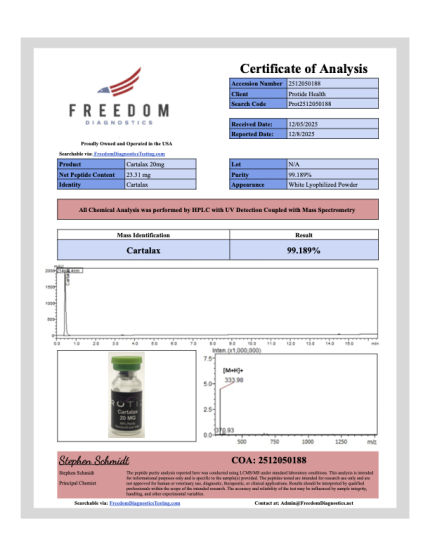
Researchers comparing short peptide systems may review Cartalax 20mg for a separate short-peptide research model.
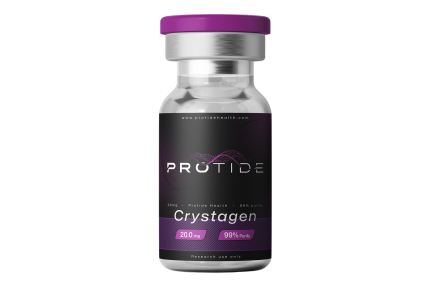
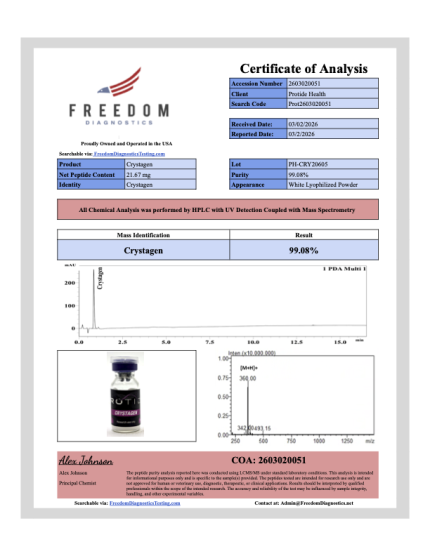
The Crystagen 20mg research peptide provides another distinct peptide sequence for comparative molecular studies.
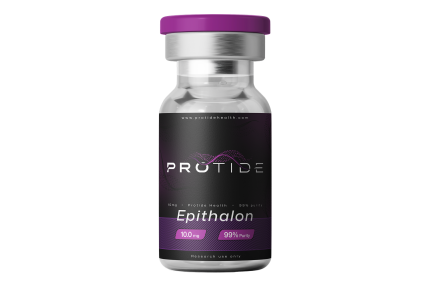
Researchers may also compare the acetylated analogue with Epithalon 10mg when investigating structural differences between parent AEDG and N-terminally acetylated Ac-AEDG.
These materials are chemically distinct and should not be assumed to produce identical experimental responses.
Frequently Asked Questions
What is N-Acetyl Epithalon?
N-Acetyl Epithalon is the N-terminally acetylated analogue of the tetrapeptide Epithalon. Its sequence is Ac-Ala-Glu-Asp-Gly-OH.
What is the sequence of N-Acetyl Epithalon?
The sequence is:
Ac-Ala-Glu-Asp-Gly-OH
The abbreviated form is Ac-AEDG.
What is its molecular formula?
The verified molecular formula is C16H24N4O10, with molecular weight 432.38 g/mol.
What is the PubChem CID?
The verified PubChem identifier for N-Acetyl Epitalon is CID 171390141.
Is CAS 307297-39-8 the CAS number for N-Acetyl Epithalon?
No. CAS 307297-39-8 is associated with parent Epithalon/AEDG. It should not be used as though it were an exact identifier for the N-acetylated compound.
Is N-Acetyl Epithalon the same as Epithalon?
No. They share the AEDG peptide sequence, but N-Acetyl Epithalon contains an additional N-terminal acetyl group and is therefore a distinct molecular entity.
Has N-Acetyl Epithalon been studied as extensively as parent Epithalon?
No. Much of the published literature concerns parent AEDG/Epithalon. Direct biological research on the N-acetylated analogue is comparatively limited.
Can research findings for Epithalon be applied directly to N-Acetyl Epithalon?
No. Parent Epithalon studies provide background context, but structural modification means experimental findings should not automatically be transferred to Ac-AEDG.
What purity does Protide Health specify?
The supplied product specification states 99% purity, with HPLC-MS verification and third-party testing.
What form is the product supplied in?
It is supplied as 20mg of white to off-white lyophilized N-Acetyl Epithalon powder in a 3mL vial.
Is N-Acetyl Epithalon intended for human use?
No. It is supplied exclusively for biochemical, molecular, analytical, in-vitro, structural, and qualified preclinical research.
Laboratory Terms & Compliance
Laboratory Research Use Only
This product is supplied exclusively for laboratory research, analytical testing, in-vitro studies, preclinical research, and qualified scientific experimentation.
It is not intended for human or veterinary consumption, medical use, diagnostic use, therapeutic use, anti-aging treatment, longevity treatment, or clinical administration.
No human dosage, administration, injection, treatment schedule, or preparation instructions are provided.
The purchaser is responsible for appropriate laboratory handling, storage, and use in accordance with applicable institutional, federal, state, and local requirements.
For research use only.


MAECENAS IACULIS
Vestibulum curae torquent diam diam commodo parturient penatibus nunc dui adipiscing convallis bulum parturient suspendisse parturient a.Parturient in parturient scelerisque nibh lectus quam a natoque adipiscing a vestibulum hendrerit et pharetra fames nunc natoque dui.
ADIPISCING CONVALLIS BULUM
- Vestibulum penatibus nunc dui adipiscing convallis bulum parturient suspendisse.
- Abitur parturient praesent lectus quam a natoque adipiscing a vestibulum hendre.
- Diam parturient dictumst parturient scelerisque nibh lectus.
Scelerisque adipiscing bibendum sem vestibulum et in a a a purus lectus faucibus lobortis tincidunt purus lectus nisl class eros.Condimentum a et ullamcorper dictumst mus et tristique elementum nam inceptos hac parturient scelerisque vestibulum amet elit ut volutpat.
Related products
Reviews
There are no reviews yet.